The Industry Shift No One Can Ignore
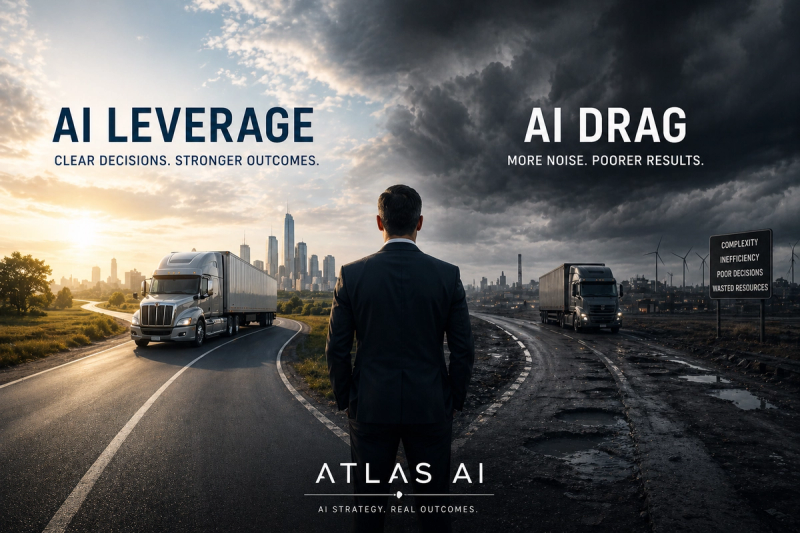
The logistics industry is standing at a crossroads. Between rising costs, driver shortages, and shifting customer expectations, the traditional “referrals and cold calls” marketing model no longer works as it once did. Buyers are more informed, competition is sharper, and digital visibility now determines who wins the freight, not just who has the lowest rate.
For decades, marketing in logistics has meant trade shows, business cards, and word of mouth. It was about who you knew and how fast you could pick up the phone. But in 2025, that phone call often comes too late. Shippers, brokers, and carriers research online long before they contact a provider. They’re comparing websites, reading case studies, and watching social proof.
According to McKinsey’s State of AI Global Survey 2025, around 72–88% of companies across industries report using AI in at least one business function. In logistics, specifically, most adoption is still focused on operations, such as route optimization, predictive maintenance, and warehouse automation; however, interest in AI-driven marketing and customer analytics is growing rapidly as companies seek new ways to compete.
AI bridges that gap. It gives logistics companies a way to compete in a digital-first world, not by replacing human expertise, but by amplifying it.
When used right, AI helps you stop guessing and start predicting. It enables you to see patterns: which customers are worth nurturing, which campaigns are wasting money, and which services actually drive profit. It’s not just technology; it’s clarity.
The companies that understand this shift are no longer asking, “Should we use AI?” They’re asking, “How fast can we integrate it?”
Why AI Marketing Matters for Logistics
Most logistics companies run lean. Teams wear multiple hats, sales cycles are lengthy, and every lead must count. That’s exactly why AI makes sense here; it’s like adding an extra set of eyes, hands, and brainpower to your marketing team without adding headcount.
Here’s what AI marketing delivers when applied to logistics:
1. Clarity on Your Most Profitable Segments Instead of guessing who your “ideal customer” is, AI analyzes your data lane history, shipment types, load profitability, payment terms, and response times to identify which customers bring the most long-term value. You stop chasing every RFP and focus on the ones that fit your model.
2. Personalized Messaging That Resonates A generic “we move freight on time” pitch doesn’t move anyone. AI tools can analyze shipper pain points in reviews, forums, or posts and reveal what they actually care about, such as on-time delivery, damage prevention, or transparent communication. You can then tailor your content to speak directly to those priorities.
3. Automation That Saves HoursAI-powered marketing automation can run your email follow-ups, social media scheduling, and content workflows on autopilot. That means less time spent managing tasks and more time building relationships.
According to Gartner’s analysis on AI in marketing, organizations are shifting from manual campaign management to analytics-driven automation, which boosts both efficiency and lead quality. As AI becomes embedded in marketing operations, teams are freeing up hours previously spent on repetitive work and focusing instead on strategic growth initiatives.
4. Real-Time ROI Tracking AI connects your marketing to your results. You can see which campaigns drive actual calls. which keywords convert into leads, and which customer types bring repeat business. You finally get a 360-degree view of what’s working and what isn’t.
When combined, these capabilities make marketing measurable, predictable, and scalable, three things every logistics executive loves to hear.
Real-World Applications You Can Start Using Today
Getting started with AI doesn’t have to be overwhelming. You don’t need a data scientist or a big tech budget; you just need the proper focus. Here are a few practical ways to begin integrating AI into your marketing right now:
1. Predictive Lead Scoring AI can scan your CRM and flag leads that match your best past customers. For example, if your most profitable clients are regional food distributors with regular routes and mid-size fleets, the system will identify similar prospects automatically.
Example: A carrier using HubSpot integrated with an AI model noticed that prospects using a specific ERP system converted 2x faster than others. They shifted outreach efforts and saw a 30% increase in booked loads within two months.
2. Smart Content Creation AI-powered writing assistants can generate drafts for blogs, LinkedIn posts, or email newsletters in seconds. The secret is using your own voice and adding industry-specific context. The human edit is where the magic happens; you make it sound real.
Example: You create a 1,000-word blog about “Reducing Claims in High-Touch Freight.” With AI tools, that one blog becomes:
- A 30-second video script for LinkedIn
- A short email campaign
- A driver spotlight post
- A one-sheet PDF for sales follow-ups
One idea, multiple touchpoints, and AI handles the repurposing.
3. Ad Spend Optimization If you’re running LinkedIn or Google ads, AI can automatically shift your budget toward high-performing audiences. You don’t have to tweak campaigns manually; it adjusts in real time.
Example: A freight tech company targeting 3PL managers discovered that ads highlighting “AI-powered dispatch efficiency” performed 60% better than general branding ads. With AI ad optimization, they doubled their leads without increasing spending.
4. Conversational Chat Assistants Adding an AI chatbot to your site enables you to instantly answer common questions, such as rates, service areas, and capacity updates, and collect lead information 24/7.
It doesn’t replace your sales team. It just captures the inquiries your human team might miss after hours or on weekends.
5. Revenue Insights and Forecasting AI can analyze sales data, seasonality, and marketing performance to predict revenue patterns. You’ll know which quarters are likely to dip and where to invest marketing dollars before you feel the hit.
The ROI of AI in Logistics Marketing
When AI is implemented effectively, it delivers measurable and lasting results. Across logistics and transportation companies using AI tools, early reports show:
- 30–50% increase in qualified leads
- 25% reduction in ad spend waste
- 40% faster response time on inbound inquiries
That’s not hype; that’s what happens when marketing runs like operations: efficient, consistent, and data-driven.
AI is about building smarter systems that learn and improve. The longer you use it, the more accurate your predictions become. Instead of chasing trends, you’re forecasting them.
Overcoming Common Fears About AI
Let’s be honest, AI can sound intimidating. But most fears fade when you understand how it actually works.
“We don’t have enough data.” You have more data than you think: emails, client notes, CRM entries, call logs, job applications, and load history. AI just helps organize and analyze it.
“We’re not tech people.” You don’t need to be. Modern AI tools are user-friendly and visual. They handle the heavy lifting behind the scenes so your team can focus on strategy and relationships.
“It’ll replace our people.” AI replaces busywork, not people. It handles repetitive tasks, such as sorting leads, posting updates, or analyzing reports, freeing your team to focus on growth and creative problem-solving.
“It’s too expensive.” Start small. Test one workflow. Measure results. Most AI tools for marketing are affordable, and many have free versions that can deliver quick wins before you scale up.
The companies that get left behind aren’t the ones that can’t afford AI; they’re the ones that never start.
Building Your 2025 AI Marketing Playbook
Think of your AI marketing system like a fleet. You wouldn’t run trucks without route planning, preventive maintenance, and real-time tracking. Your marketing needs the same structure.
Here’s a three-phase roadmap to build your own AI-powered marketing engine:
- Define your ideal customer profiles using past wins.
- Map the buyer journey: awareness, consideration, and decision.
- Choose one main channel (like LinkedIn) and one support channel (like email).
- Select your AI tool stack: CRM, automation, and analytics.
- Build a simple 90-day content calendar tied to revenue goals.
- Publish your first SEO-optimized blog post.
- Start using predictive lead scoring in your CRM.
- Run small A/B ad tests with AI optimization.
- Repurpose your top content into multiple formats to maximize its reach.
- Add a chatbot to capture after-hours leads.
- Double down on what works; shift the budget toward proven content.
- Fill content gaps with new guides and case studies.
- Refine lead scoring based on behavior (like webinar attendance).
- Document your process so your marketing can run without constant oversight.
AI marketing is not a one-time project; it’s a living system that keeps learning, just like your business.
According to Harvard Business Review, companies that integrate AI into sales and marketing are using data to make faster, smarter decisions and execute campaigns with greater precision. Rather than focusing solely on automation, these organizations are rethinking entire workflows, enabling their teams to act on insights in real time and respond to market changes with agility.
The takeaway is clear: AI doesn’t just speed things up; it transforms how decisions are made. By processing data at scale and eliminating guesswork, it empowers marketing and sales teams to focus more on strategy, creativity, and relationship-building, the areas where human value matters most.
The Bottom Line: People + AI Win
The most successful logistics brands won’t be the ones with the most trucks or the biggest budgets. They’ll be the ones who understand people and know how to use AI to serve them better.
AI doesn’t make your company less human; it gives you the time and data to be more human. To focus on relationships, to deliver on promises, and to grow with purpose.
Let’s Build It Together
You don’t need a million-dollar system to see a real impact. You need clarity, consistency, and a roadmap.
If you’re ready to see how AI can grow your logistics or service-based business, let’s talk strategy. 👉 Book your 30-minute call here.